Invoice vs Quote vs Estimate: What's the Difference?
Invoice vs Quote vs Estimate: What's the Difference?
Many business owners use the terms invoice, quote, and estimate interchangeably. While these documents are related, they serve very different purposes in the sales and billing process.
Understanding the difference can help you communicate more clearly with customers, reduce disputes, and maintain professional records.
For faster billing processes, consider using an online invoice generator to create polished invoices efficiently.
What Is an Estimate?
An estimate is an approximation of the expected cost of a project, product, or service.
Businesses typically provide estimates when the exact scope of work is not yet fully known.
For example, a contractor may estimate that a renovation project will cost between $4,000 and $5,000 depending on the materials selected.
Characteristics of an Estimate
- Provides an approximate cost
- Subject to change
- Used early in discussions
- Helps customers understand potential expenses
Example
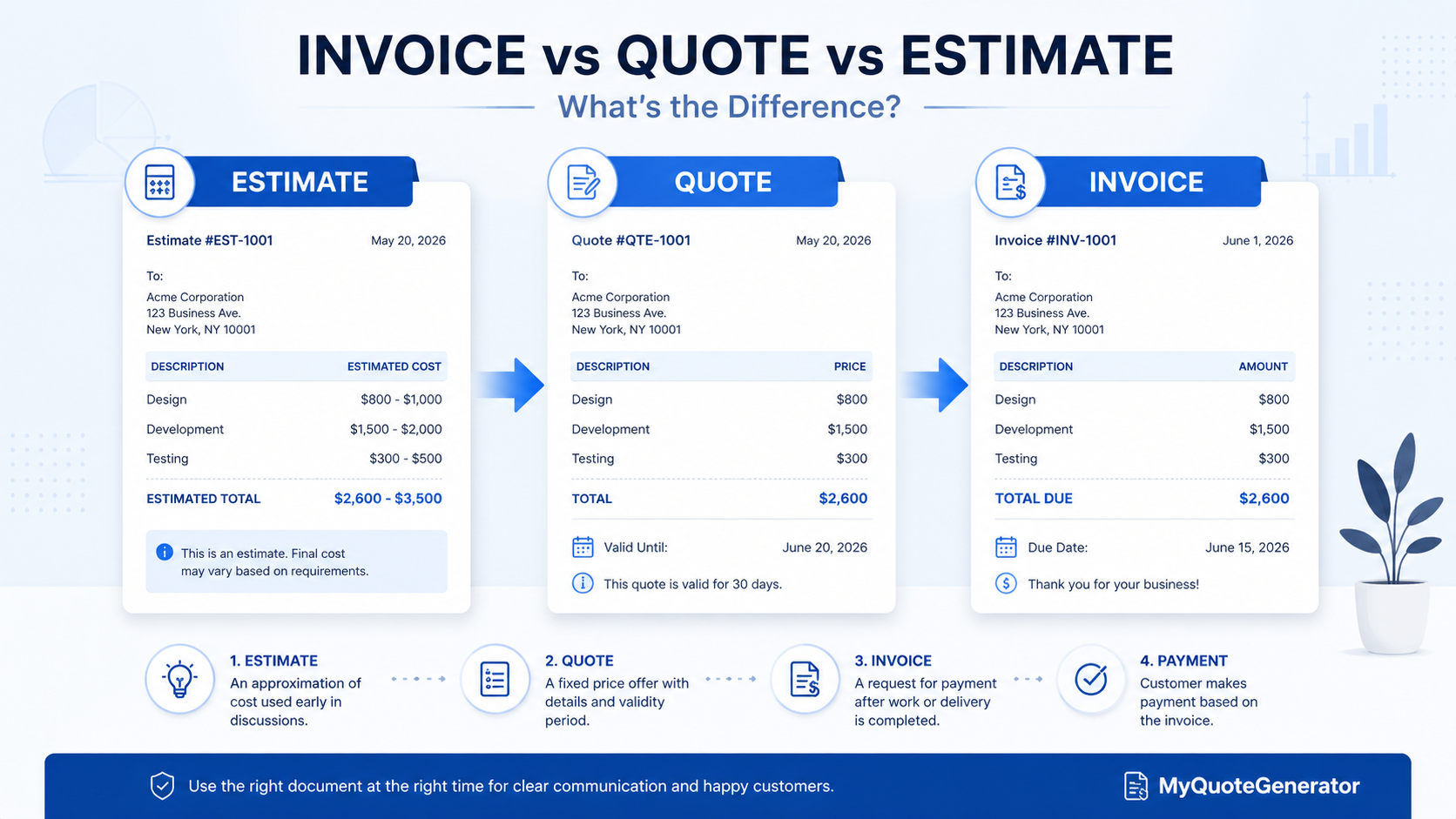
Website Development Estimate
- Design: $800
- Development: $1,500
- Testing: $300
Estimated Total: $2,600
The final price may change depending on project requirements.
What Is a Quote?
A quote is a formal offer to provide products or services at a fixed price.
Unlike an estimate, a quote is generally more precise and is often considered a commitment to deliver the specified work for the stated amount.
Characteristics of a Quote
- Fixed pricing
- Clearly defined scope
- Usually valid for a specific period
- Often accepted before work begins
Example
Website Development Quote
- Design: $800
- Development: $1,500
- Testing: $300
Total Quote: $2,600
Valid Until: July 31, 2026
Once accepted, the quoted price typically does not change unless the scope changes.
What Is an Invoice?
An invoice is a request for payment issued after products have been delivered or services have been completed.
Invoices record what was provided, how much is owed, and when payment is due.
Characteristics of an Invoice
- Issued after work is completed
- Requests payment
- Includes payment terms
- Used for accounting and tax records
Example
Invoice #INV-1001
Website Development Services
- Design: $800
- Development: $1,500
- Testing: $300
Total Due: $2,600
Payment Due: July 15, 2026
The Typical Workflow
Most businesses follow this process:
- Estimate
- Quote
- Invoice
- Payment
Not every transaction requires all three documents, but understanding their purpose helps create a professional customer experience.
Comparison Table
| Feature | Estimate | Quote | Invoice |
|---|---|---|---|
| Purpose | Approximate cost | Fixed offer | Request payment |
| Pricing | Flexible | Fixed | Final |
| Sent Before Work | Yes | Yes | No |
| Sent After Work | No | No | Yes |
| Legally Binding | Usually No | Often Yes | No |
Common Mistakes
Using Estimates as Final Prices
Customers may assume an estimate is a guaranteed price. Clearly communicate that estimates are approximate.
Sending Invoices Before Work Is Agreed
Always ensure customers understand and approve the scope of work before issuing invoices.
Missing Important Information
Every document should include:
- Business details
- Customer details
- Date
- Reference number
- Description of products or services
- Pricing information
Which Document Should You Use?
Use an estimate when costs are uncertain.
Use a quote when you are ready to offer a fixed price.
Use an invoice when it is time to collect payment.
Final Thoughts
Estimates, quotes, and invoices each play an important role in the customer journey. Using the correct document at the right time improves professionalism, reduces misunderstandings, and helps maintain accurate financial records.
With MyQuoteGenerator, you can create professional estimates, quotes, and invoices in minutes using a single platform.
Create professional invoices in seconds
Free invoice generator — no sign-up required
Create Free Invoice →